
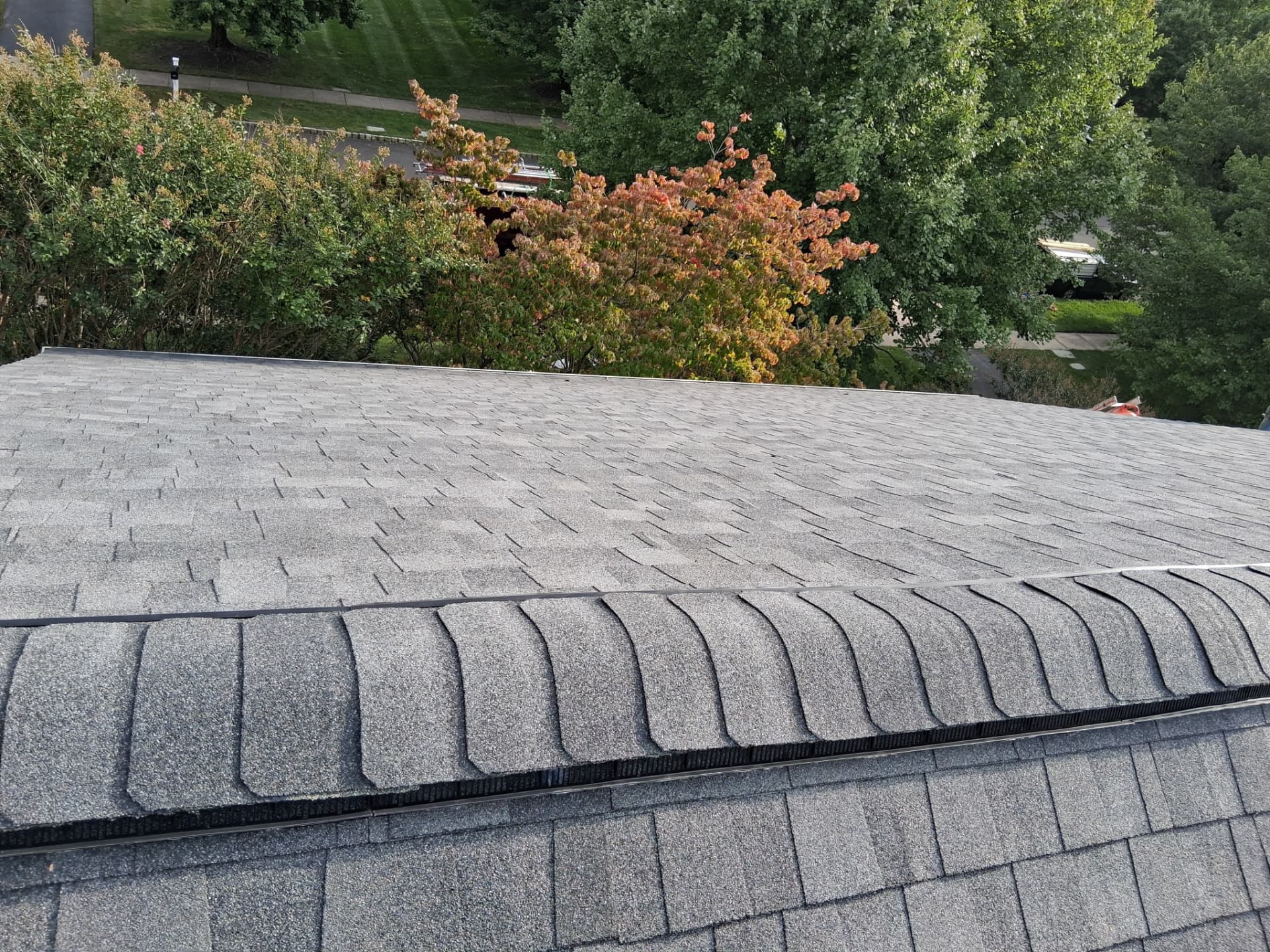
A ridge vent is the low, continuous vent that runs along the peak of a roof, usually covered with cap shingles so it blends in. It lets warm, moist air escape from the top of the attic. On most of the roofs we replace around Flemington, it is the main exhaust vent.
How a ridge vent works
Ventilation needs two openings: intake low on the roof and exhaust high on the roof. Soffit vents under the eaves pull in outside air, and the ridge vent lets it out at the peak. Warm air rises, so air moves through the attic on its own without any fans.
A ridge vent without enough soffit intake doesn't work well. Part of a proper roofing job is making sure the intake and exhaust are balanced.
Why it matters in New Jersey
In summer, a hot, unventilated attic bakes shingles from below and can shorten their life. In winter, warm attic air melts snow on the roof, and the water refreezes at the cold eaves. Those ice dams push water under shingles and cause leaks along ceilings and outside walls.
Moisture is the other problem. Showers, cooking and laundry send humid air into the attic. Without ventilation it condenses on the roof deck, which can lead to mold, rot and soft decking.
Signs your attic ventilation isn't working
- Ice dams and icicles along the eaves every winter
- Frost or damp spots on the underside of the roof deck
- A musty smell or dark staining in the attic
- Upstairs rooms that stay very hot in summer
- Shingles aging faster on one section of the roof
Don't mix exhaust vents
Combining a ridge vent with gable vents or box vents on the same attic can short-circuit the airflow, pulling air from the nearest vent instead of from the soffits. Shingle manufacturers generally recommend one type of exhaust per attic space, so we review existing vents before adding a ridge vent.
When to add or replace a ridge vent
The best time is during a roof replacement, when the ridge can be cut open and the decking and soffits can be checked at the same time. A damaged or crushed ridge vent can also be replaced on its own as a roof repair. If you are dealing with ice dams or a hot attic, ask about ventilation at your next inspection.